





Why Being Fit Doesn’t Always Mean Being Healthy in 2026
Oct 16, 2026
Most of us grow up believing that fit automatically means healthy. If someone runs marathons, trains daily, or looks athletic, we assume their body is thriving.
But that assumption is often wrong.
You can be extremely fit—and still be internally exhausted, hormonally imbalanced, inflamed, or running on stimulants and sugar just to keep going. Fitness and health overlap, but they are not the same thing.
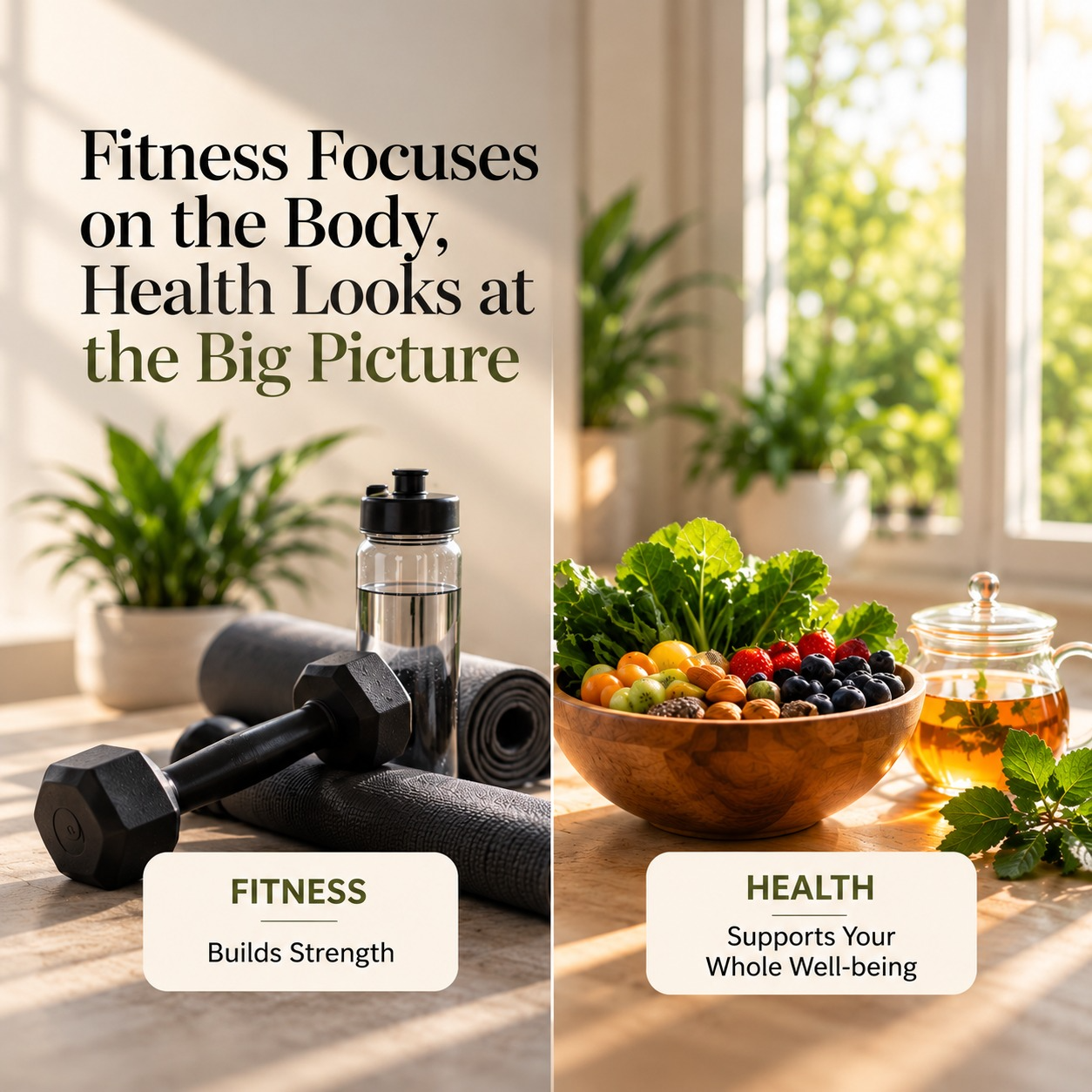
The Confusion Between Fitness and Health
Fitness is about performance.
Health is about function.
Fitness answers questions like:
-
How far can you run?
-
How heavy can you lift?
-
How long can you push?
Health answers very different questions:
-
How well do you recover?
-
Is your energy stable throughout the day?
-
Is your digestion calm and predictable?
-
Do you sleep deeply?
-
Can your body handle stress without crashing?
This difference becomes very clear when we look at athletes.
A Reality Most People Don’t Talk About: Athletes Rely on Sugar
Here’s something surprising if you’ve never followed endurance sports closely.
During intense training or competition, many:
-
Marathon runners
-
Cyclists
-
Football players
-
Tennis professionals
consume sugary sports drinks, glucose gels, and sometimes even Coca-Cola mid-race.
Not occasionally—strategically.
Why?
Because under extreme physical stress, the body burns through glucose faster than it can naturally replenish it. Quick sugar becomes emergency fuel, not nourishment.
This doesn’t mean sugar is healthy.
It means the body is being pushed beyond what’s sustainable without shortcuts.
What This Actually Tells Us
If even elite athletes—people at peak physical performance—need:
-
Fast sugar
-
Artificial energy
-
Constant refueling
just to function during events, it reveals something important:
Extreme fitness often depends on short-term fixes that are not designed for long-term health.
Athletes optimize for performance windows.
Most people are trying to optimize for everyday life.
Fitness vs Health: The Core Difference
|
Fitness Focus |
Health Focus |
|
Performance & output |
Recovery & balance |
|
Endurance & strength |
Energy stability |
|
Training volume |
Nervous system calm |
|
Results you can measure |
Signals you can feel |
|
Short-term peaks |
Long-term sustainability |
You can score very high on the left column while quietly struggling on the right.

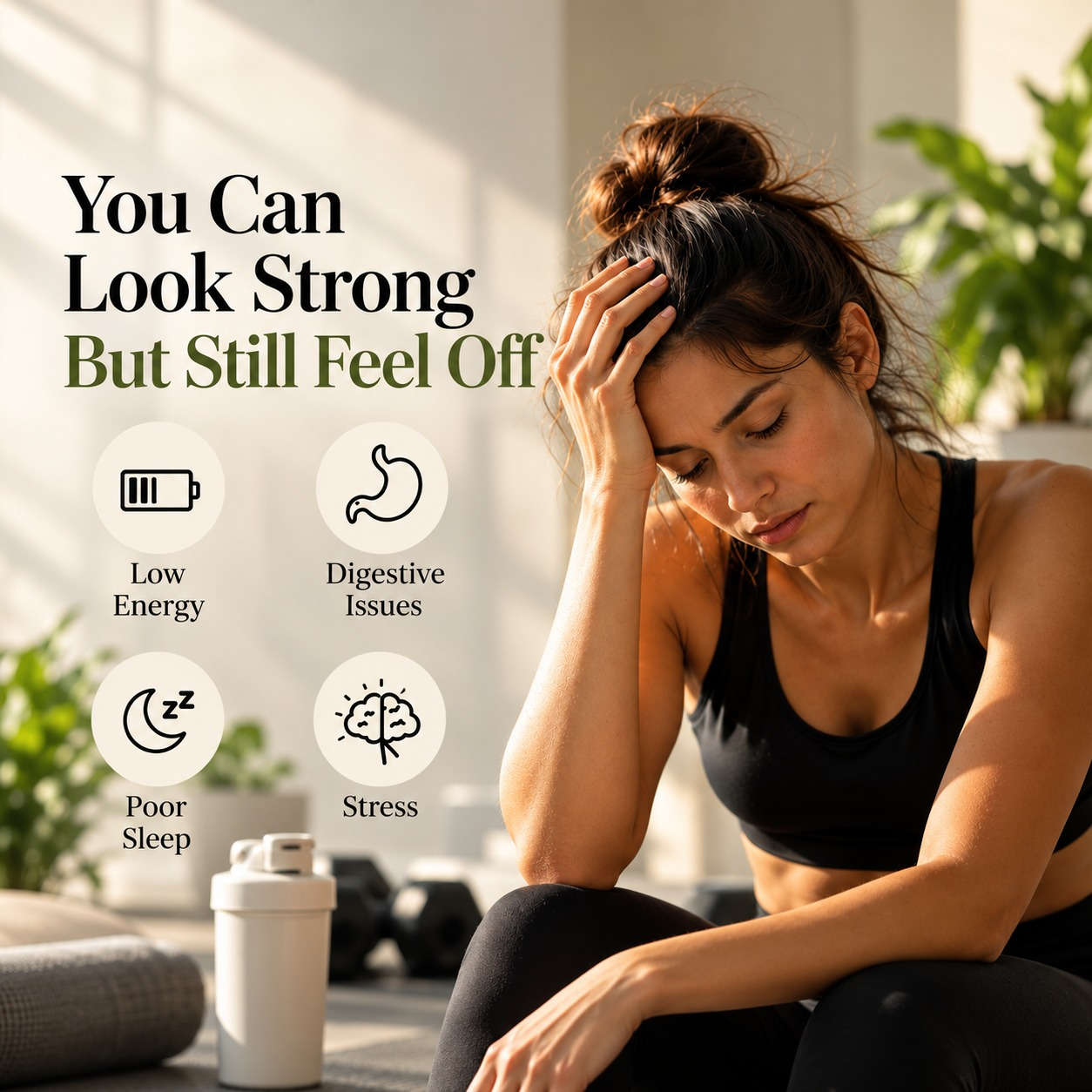
When Being “Fit” Masks Imbalance
Many fit people normalize things that are actually warning signs:
-
Constant muscle soreness
-
Poor sleep despite exhaustion
-
Digestive discomfort
-
Irritability or anxiety
-
Frequent colds or low immunity
Because performance is still there, these signals are ignored. But health is not about how much pain you can tolerate—it’s about how well your body self-regulates.
Endurance Doesn’t Equal Metabolic Health
Running long distances doesn’t automatically mean your metabolism is healthy.
In fact, long-term high-volume endurance training can:
-
Elevate cortisol (stress hormone)
-
Disrupt hormones
-
Increase sugar dependence during activity
-
Reduce recovery capacity over time
That’s why someone can finish a marathon and still feel constantly tired, inflamed, or dependent on caffeine and sugar.
Sugar During Sports: Fuel, Not Health
When runners drink sugary sports drinks or even cola mid-race, it’s not because sugar supports health. It’s because the body is in survival mode during extreme exertion.
That same strategy, when applied to everyday life, backfires.
If your daily routine requires:
-
Constant caffeine
-
Frequent sugar
-
Energy crashes and refueling
…it’s a sign of imbalance, not strength.

Health Is How You Feel When You’re Not Training
One of the simplest ways to tell the difference between fitness and health is to look at rest days.
Ask yourself:
-
Do I feel calm or restless when I stop?
-
Is my energy steady, or do I crash?
-
Do I sleep well without exhaustion?
-
Is my digestion comfortable?
If you only feel “good” while training—and feel worse when you stop—fitness may be compensating for imbalance.
Longevity Requires a Different Mindset
Athletes train in cycles:
-
Push
-
Peak
-
Recover
Many regular people:
-
Push constantly
-
Skip recovery
-
Call it discipline
But the body doesn’t distinguish between “elite training” and “daily stress.” It only knows load and recovery.
Long-term health depends on:
-
Joint preservation
-
Hormonal stability
-
Nervous system regulation
-
Digestive strength
-
Emotional balance
None of these show up clearly on a stopwatch.
The Healthiest People Aren’t Always the Fittest
Truly healthy people often:
-
Have stable energy without stimulants
-
Recover quickly from stress
-
Sleep deeply
-
Don’t rely on sugar for basic functioning
-
Can exercise—or skip it—without crashing
They may not look extreme, but they feel resilient.
Fitness Is a Tool, Not the Goal
There is nothing wrong with:
-
Training hard
-
Running races
-
Playing competitive sports
The problem starts when:
-
Performance replaces wellbeing
-
Recovery is treated as weakness
-
Warning signs are ignored
Fitness should support health, not override it.
The Better Question to Ask
Instead of asking:
“Am I fit?”
Ask:
-
Is my energy stable?
-
Do I recover well?
-
Can I slow down without falling apart?
-
Do I feel calm when I’m not training?
Those answers reveal health more accurately than any race time or workout log.
Final Thoughts
Seeing athletes drink sugary drinks or even cola mid-sport isn’t proof that sugar is healthy. It’s proof that extreme fitness requires shortcuts.
Most people don’t need to train like athletes.
They need bodies that work well every day.
Being fit can be impressive.
Being healthy is sustainable.
And in the long run, sustainability—not performance—is what truly matters.
Frequently Asked Questions
1. Can someone be fit but not healthy?
Yes. Fitness focuses on physical performance and endurance, while health includes recovery, digestion, hormonal balance, sleep quality, and mental wellbeing. A person can perform well yet still have internal imbalances.
2. Why do athletes consume sugary drinks during sports?
During intense physical activity, the body burns glucose rapidly. Sugary drinks or even cola provide quick fuel to sustain performance, but this is short-term energy support—not a marker of long-term health.
3. Does high endurance training affect health negatively?
When recovery is inadequate, excessive endurance training can increase stress hormones, disrupt sleep, and affect metabolic and hormonal balance over time.
4. How can I tell if I’m healthy, not just fit?
Health is reflected in stable daily energy, good sleep, calm digestion, emotional balance, and the ability to rest without crashing—not just workout performance.
5. Is relying on caffeine or sugar a sign of poor health?
Frequent dependence on stimulants or sugar to get through the day often indicates underlying energy or recovery imbalance rather than true vitality.
6. Should regular people train like athletes?
No. Athletes train for performance peaks, while most people should focus on sustainability, recovery, and overall wellbeing rather than constant high-intensity training.
Recent Post

The Longevity Playbook: How Elite Athletes Stay at the Top for Decades

Trusted Ayurvedic Brands Available Worldwide Through Ayurscape

Summer Wellness Tips: Stay Healthy, Hydrated & Energized in 2026

Natural Weight Management: Sustainable Ways to Maintain a Healthy Body (2026 Guide)

Natural Hair Loss Remedies: Causes, Prevention & Herbal Solutions (2026 Guide)

How Your Phone Is Quietly Draining Your Mental Energy (Without You Even Realizing It)
The Modern Burnout Nobody Talks About (Mental Overload)

Why You Feel Tired Even When You Sleep Enough (and What Actually Helps You Feel Rested Again)

Why Your Body Needs Recovery More Than Motivation
Why Gentle Stretching and Mobility Work Can Be More Effective Than Heavy Workouts (Especially as Life Gets Busier)